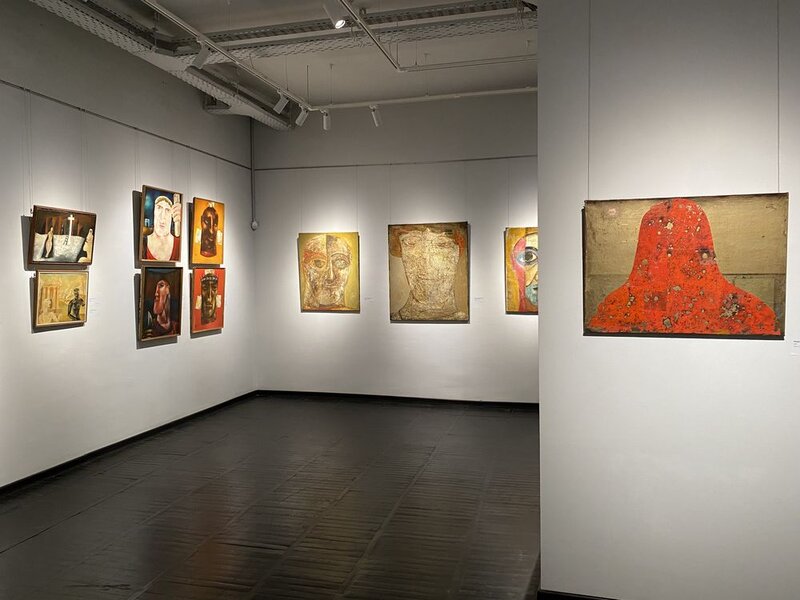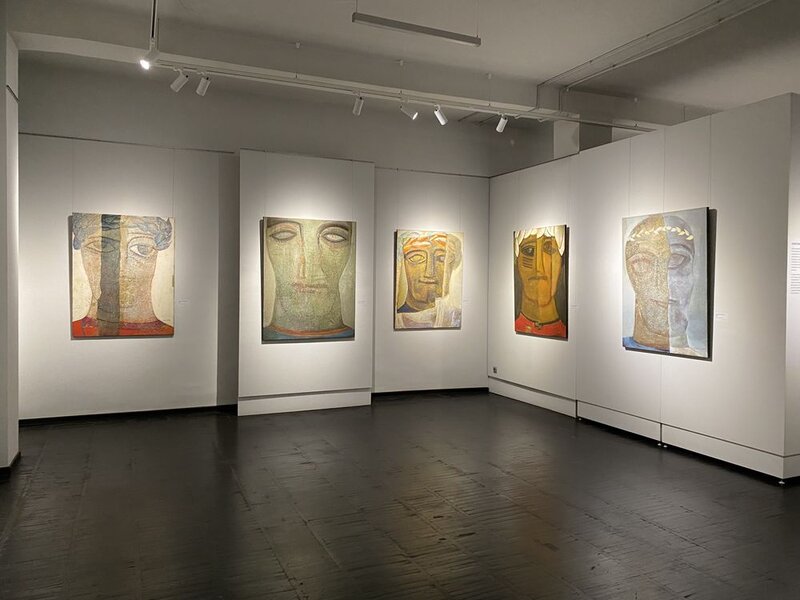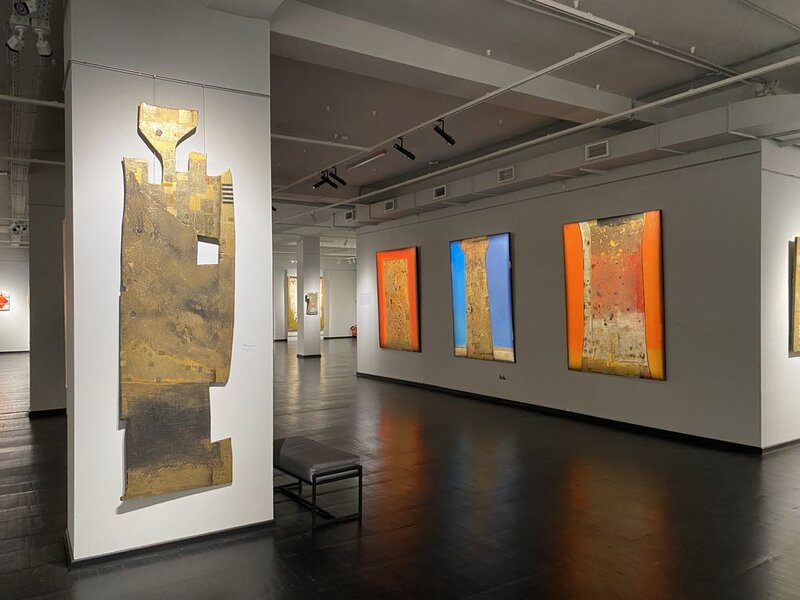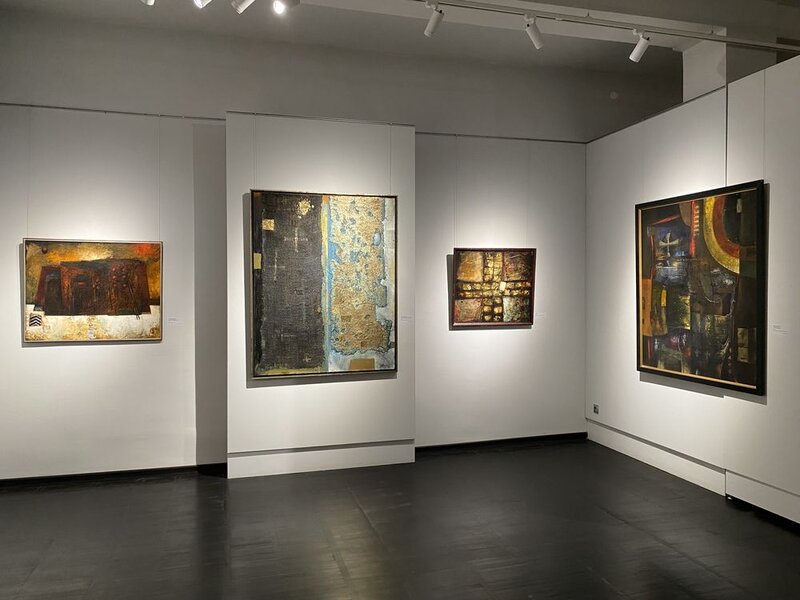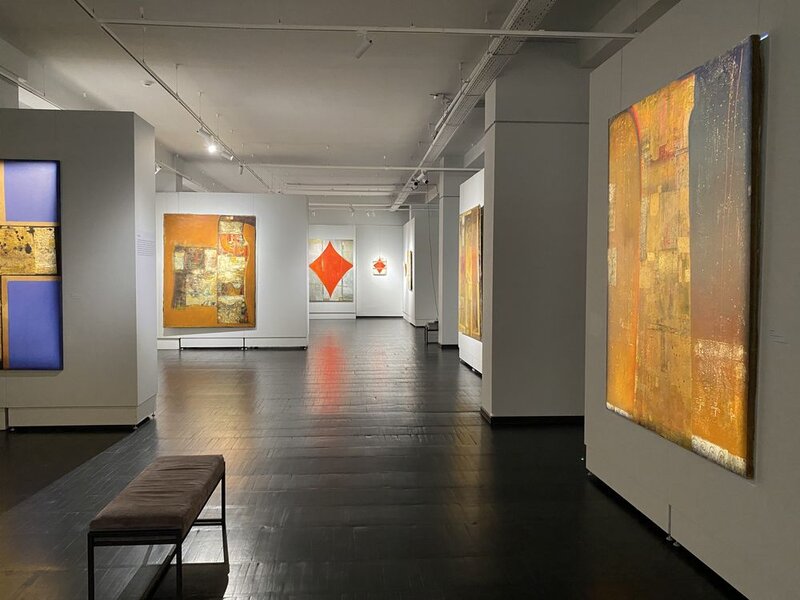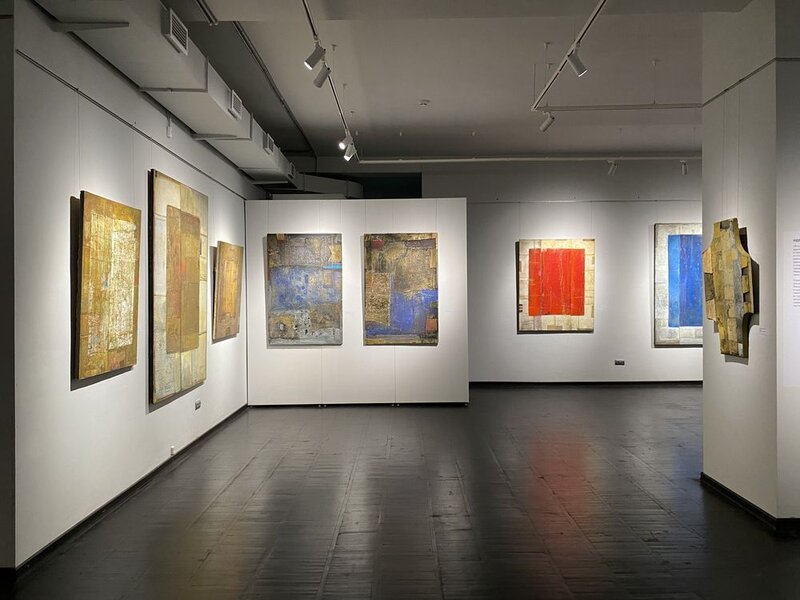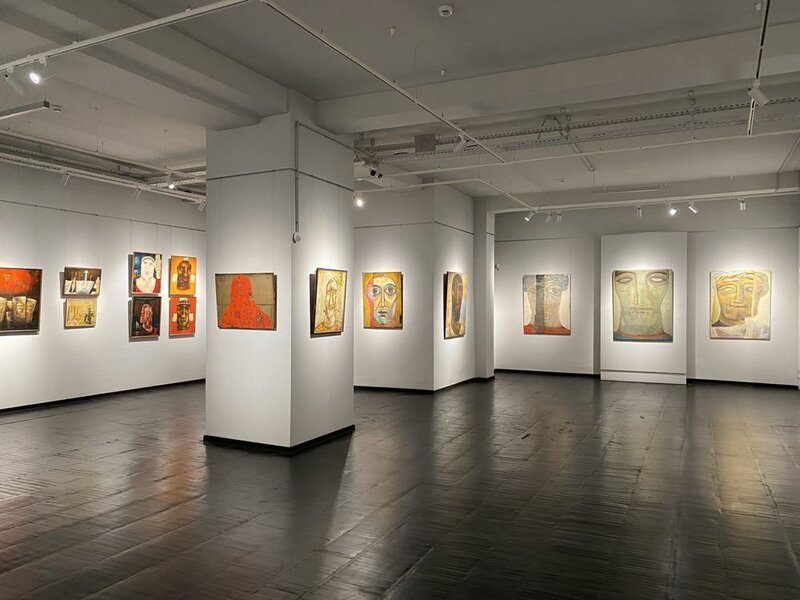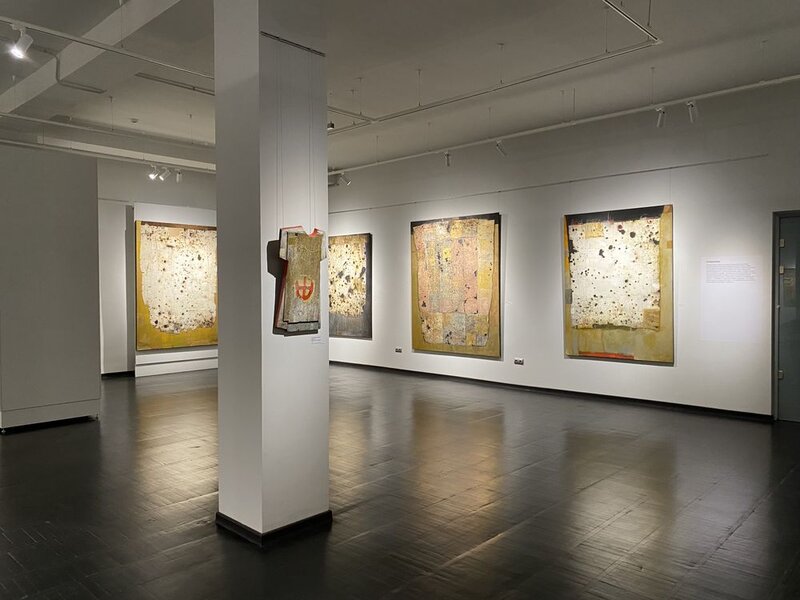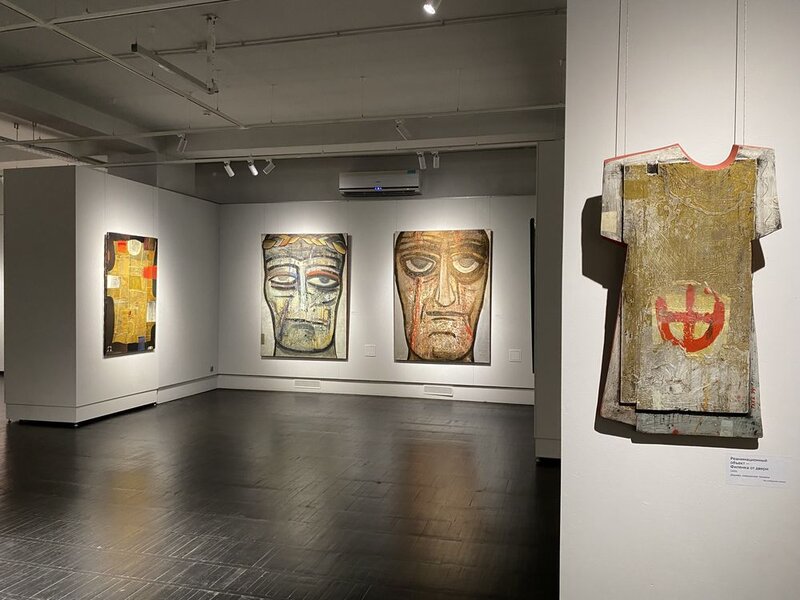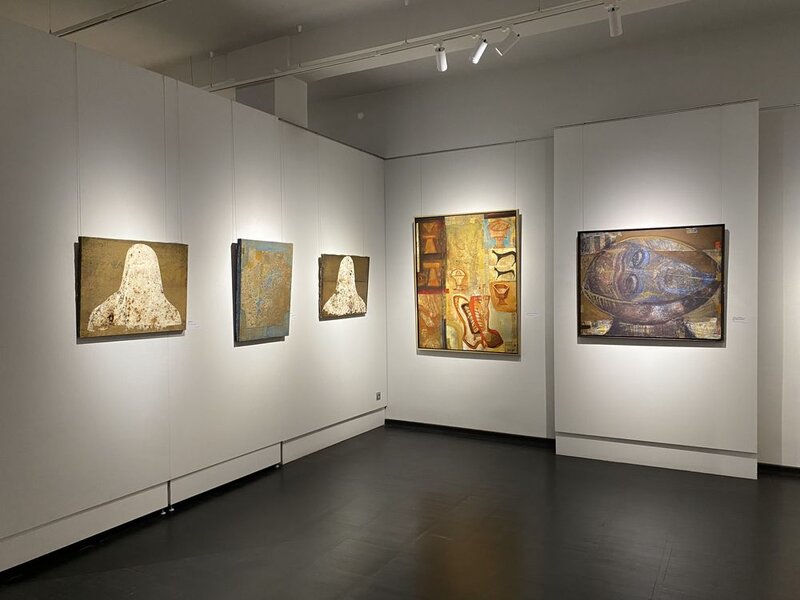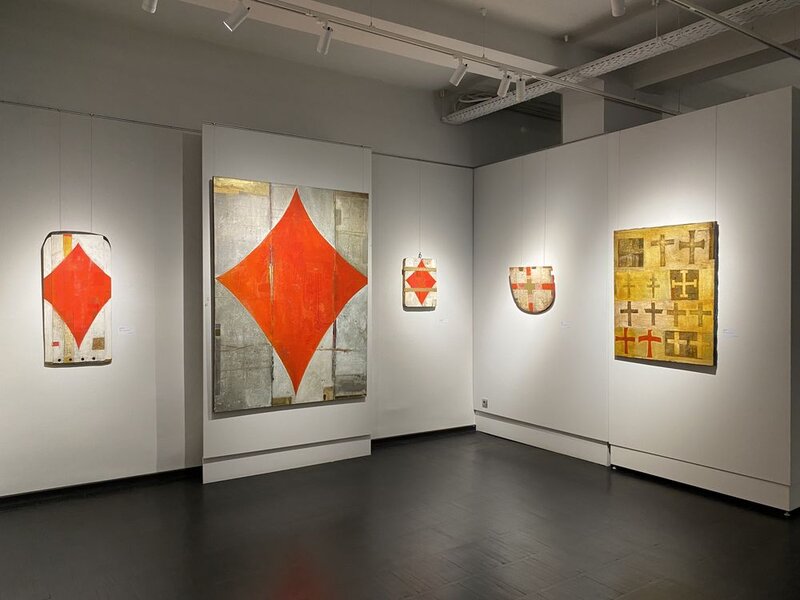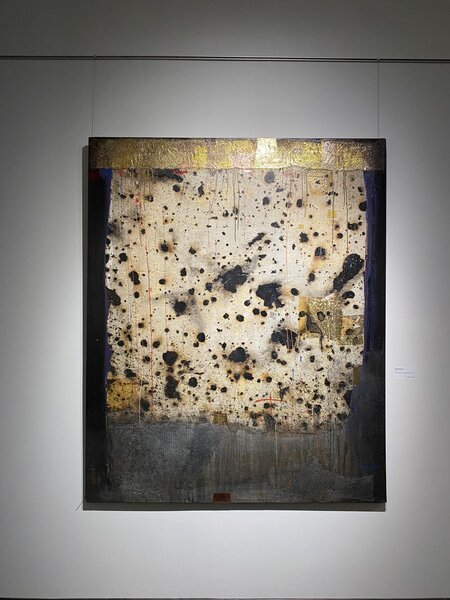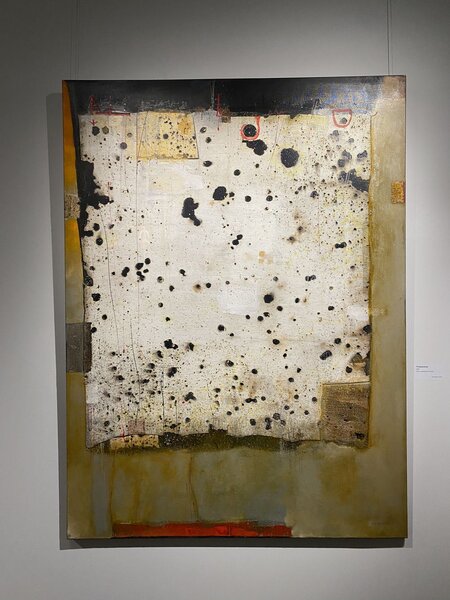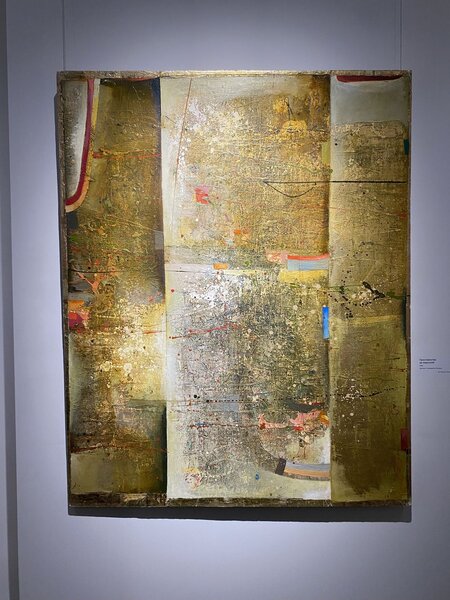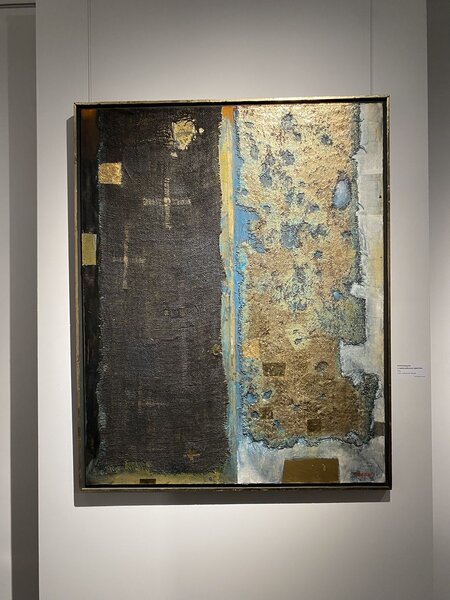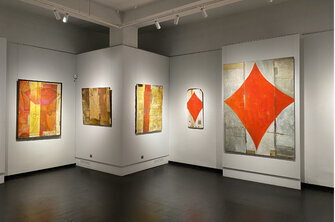
The Palimpsest exhibition will open in the Large Exhibition Hall of the Hermitage-Ural Center with the support of the Marina Gisich Gallery (St. Petersburg). Traces of time in the art of Gleb Bogomolov". The project will present the work of the legendary hero of the underground of the Northern capital, an artist-philosopher who created his own unique painting style and the mythology of creativity. The exhibition includes eighty-six paintings and objects by Gleb Bogomolov from the collection of the artist's family. Bogomolov's development as an artist took place during the time of the "Iron Curtain": prohibitions and the impossibility of traveling to other countries prompted Gleb Sergeevich to travel back in time to ancient cultures and find in them an inexhaustible supply of inspiration, new forms and meanings, to conduct a dialogue with past cultures, which is then translated into paintings and art objects. The palimpsest became a technique that allowed Gleb Bogomolov to create new forms. (In ancient times, a palimpsest was a manuscript written on parchment or papyrus, on which the primary text was erased and replaced with another, but it was not possible to completely destroy the ink, and the old text was visible through the new text). In his works, the old appears through the new, one image appears through another, ruin through restoration, gold reveals itself from the dark layers of time. A multi-layered structure is formed in the artist's paintings, emphasizing the multiplicity of images and prints of different cultures. The works of Gleb Bogomolov do not just depict, but have their own material biography. They look like a cultural object that has been found, damaged, and re-created. Their surface can be described as a palimpsest surface. In it, one layer does not cancel out the other, but enters into a relationship of partial concealment and partial manifestation with it. The trace of time is one of Bogomolov's main motives. The artist does not just depict the old; he creates the effect of a thing that has survived history. His works bear the brunt of damage, restoration, and memory. Hence the interest in scraps, fabrics, paper, boards, scuffs and losses. The artist turns to antiquity, Byzantium, ancient Russian icons, European modernism and the Russian avant-garde, creating his own system of cultural references. For Bogomolov, the Russian avant—garde is not a stylistic quotation, but one of the historical sources of freedom of form. It is not specific borrowings that are particularly important here, but the type of artistic thinking itself: a painting is understood as an independent reality, color as a semantic energy, a surface as an event, and a sign as an equal element of the pictorial system. During the same period, Bogomolov began to create a series of "Archetypes", which he would work on all his creative life. In these images, contemporaries and researchers saw a parodic reference to honor boards and official types of government. The human face turns into a sign, into a mask, into a generalized type. One of the artist's creative methods was to create cycles of works: "Archetypes", "Heroes", "Arks", "Bowls", "Reanimation objects", "Maforium", "Cross", "Mandorla", "Shroud", "Aegina" and others — these are not illustrative series, but different ones. variants of one problem: how a material picture can hold a memory, an event, a trace, and the presence of another world. Serialization works for Bogomolov as a way of long-term study of a single form. In Bogomolov's works, texture, board, fabric, paper fragments, gold, scratched line and simulated loss become no less significant than the depicted motif. A painting doesn't just show an object, it becomes an object itself. The artist's use of boards, which were once furniture elements, is especially important: countertops, sashes, shelves of cabinets. This technique, which was formed back in the era of nonconformism, then received a symbolic justification. Bogomolov introduces into the work not a neutral material, but a thing with a past function. When such a thing becomes the basis of a painting, it transfers into painting the memory of everyday, past, private, and through gold and gesso rises to the level of an almost sacred artifact. The Aegina cycle was conceived by the artist after visiting the Greek island in 1998. In most of the works in this series, the composition is centered by a single monolith of a Doric column, which creates a wide range of interpretations: a pillar, a tectonic pillar, an anthropomorphic figure, an acropolis sign, a memory of classical culture and an image of a spiritual vertical. Gleb Bogomolov's connection with the city of Leningrad/St. Petersburg is shown not only in the biography. The culture of the city on the Neva River with its layers of the imperial capital, Soviet provincialization, museum saturation and traumatic memory creates the very model of its art. He works as an artist of the palimpsest city: the past does not disappear here, but emerges through the later layers.
Source: Yekaterinburg Museum of Fine Arts website
https://i-z-o.art/exhibitions/palimpsest-sledy-vremen-v-iskusstve-gleba-bogomolova-event-3747.html