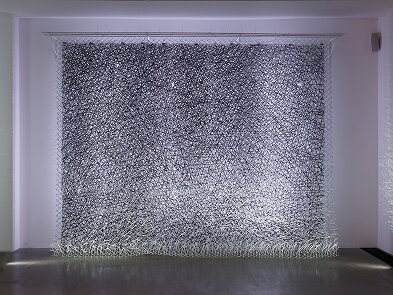
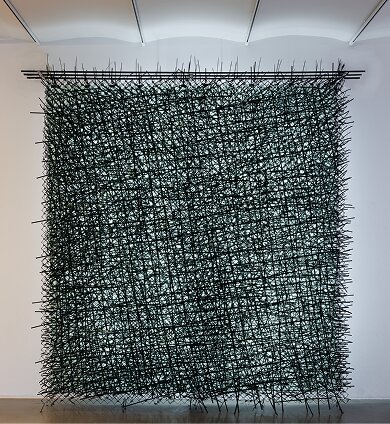
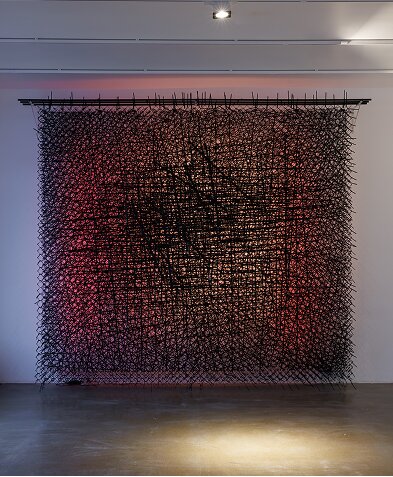
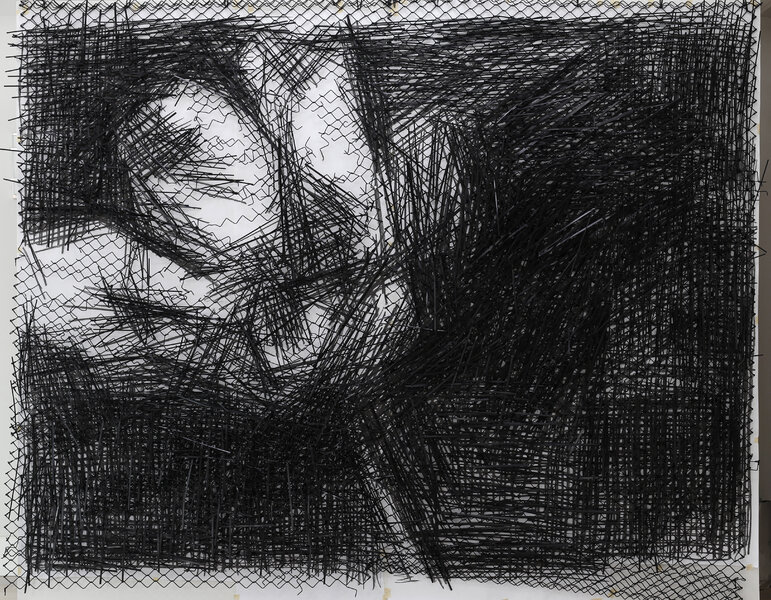
INSTALLATIONS. 2021–2022

Of course, we have indestructible roots in classical drawing. The world comes to life for us through a black stroke — even if that stroke is made with a plastic clamp. Academic drawing is like an old soundtrack you want to forget, but it keeps looping in your head. It may dissolve in the transparent layers of tracing paper, hide behind a grid, be marred by staples, but it holds on.


Different materials exist just like people in big cities: sometimes harmoniously, sometimes in chaos, but always in intense contact. The chain-link grid creates a border, but the drawing dissolves it. The paper documents, but it's also easy to tear. We use materials so that they don't just coexist, but argue and complement each other.


Dmitry Gretsky/Evgenia Katz
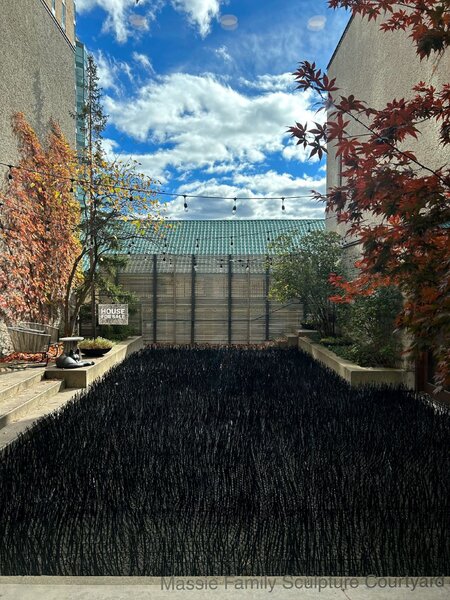
CARGO FAIRY TALE. 2025

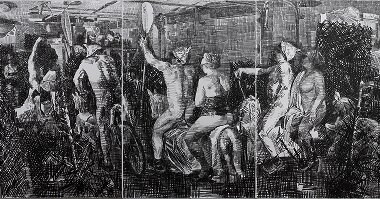
The practice of artists Dmitry Gretsky and Evgenia Katz over the years has been associated with the disclosure of the properties and possibilities of pencil drawing. The exhibition CARGO tale can be seen as several episodes of the serial story of Gretsky and Katz, interlocking several plots. The first develops from small outlined sheets that grow into multi-meter Curtains, the pattern is complemented by layers of metal mesh, the strokes or traces of their erasure grow into space with plastic clamps, black or white. The next reversal is a return from abstraction to figurative drawing, but already modified by the experience of creating images that cannot be considered. The barrier hall precedes or protects the entrance to the secret fishing area. Here, with the help of figurative graphics, the artists represent two characters engaged in selfless waste of time. Sitting on the deck of a motorboat, they try to sunbathe naked, cast a fishing rod, swing oars or invent other forms of leisure, but all their actions take place in an enclosed garage and look staged. A novel about confidential intimacy, sealed by rituals of deliberately ridiculous posing for each other, can also be read as an allegorical story about escape from reality, or as a reference book collecting information about various forms of displaced activity of people in a stressful situation. The obvious intimacy of the series is enhanced by the similarity of the characters to the authors, or rather, the artists use themselves as models.


Anastasia Kotyleva 

The age limit is 18+.

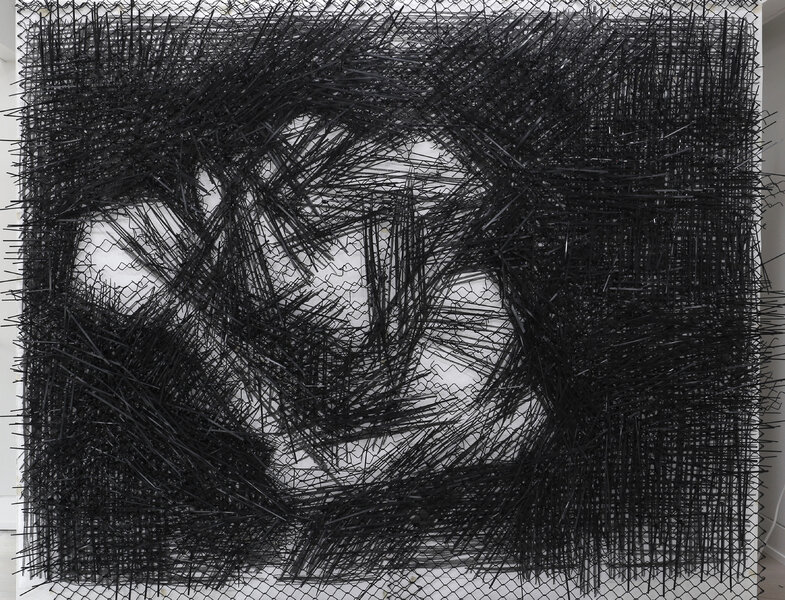
OBJECTS. NARCISSUS. 2021.

 Narcissus is an ongoing project that emerged from the idea of “self design” through self censorship. When talking about our identity, it is possible to assume that it can be easily rewritten, therefore we become more skeptical about an objective assessment of 

“ourselves” and in what form we may exist. Do we truly exist or it is just “an idea of ourselves” that exists?

 With this work Gretzky and Katz want to predict the future of the social media effect on oneself and create new myths around their identity through modern self-design tools such as social media. In the contemporary world our identity can be easily altered and manipulated. Through the use of a representational language of images, artists are trying to rewrite his personality for the public and, therefore, reinvent the sensation of the myth about Narcissus.
 Myth is a broad term. Myth – a word, a story, - is derived from ancient Greek. Initially, it was understood by the absolute totality of (sacred) values and philosophical truths confronting daily-empirical (profane) truths expressed by ordinary 'word'. Classical myth and modern myth can be two very contrasting things, but they have a similar principal, they are. However, myth provides us with something very human, and we continually seek answers from it. The classic version of the myth about Narcissus by Ovid is one of the examples of it.