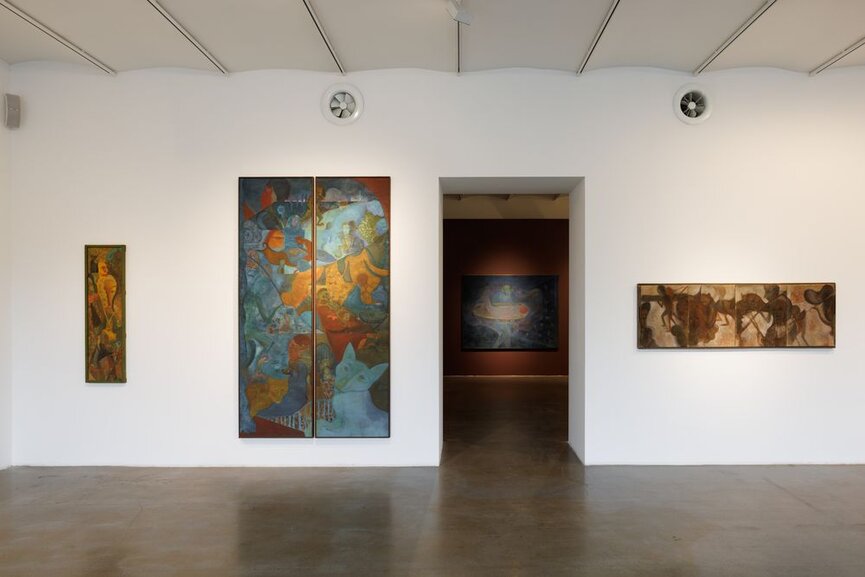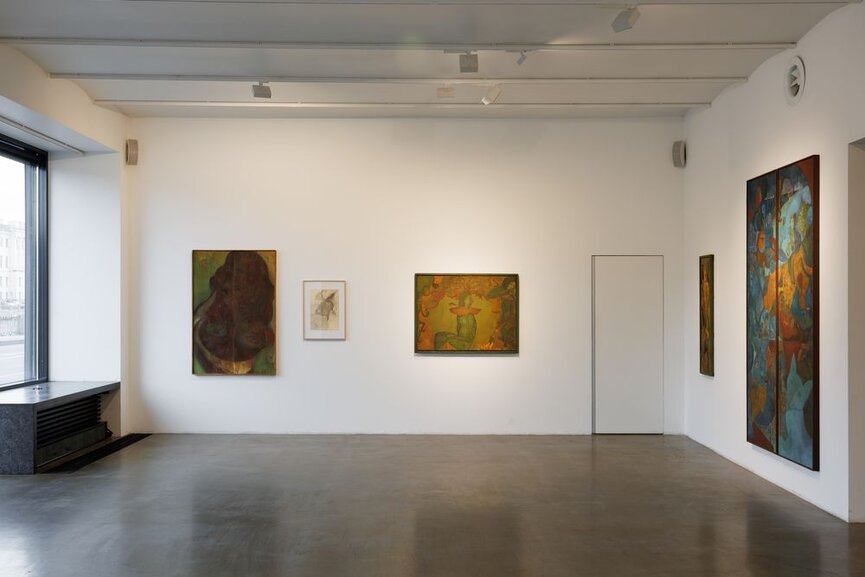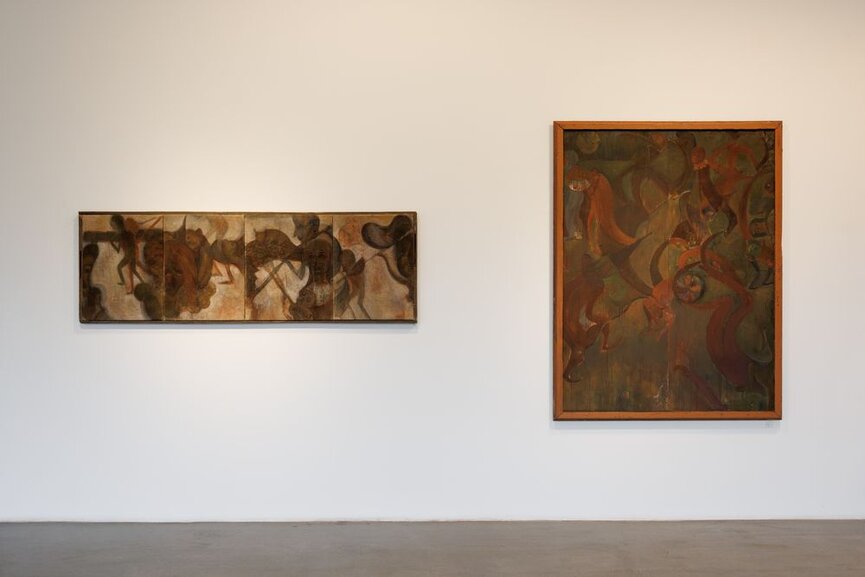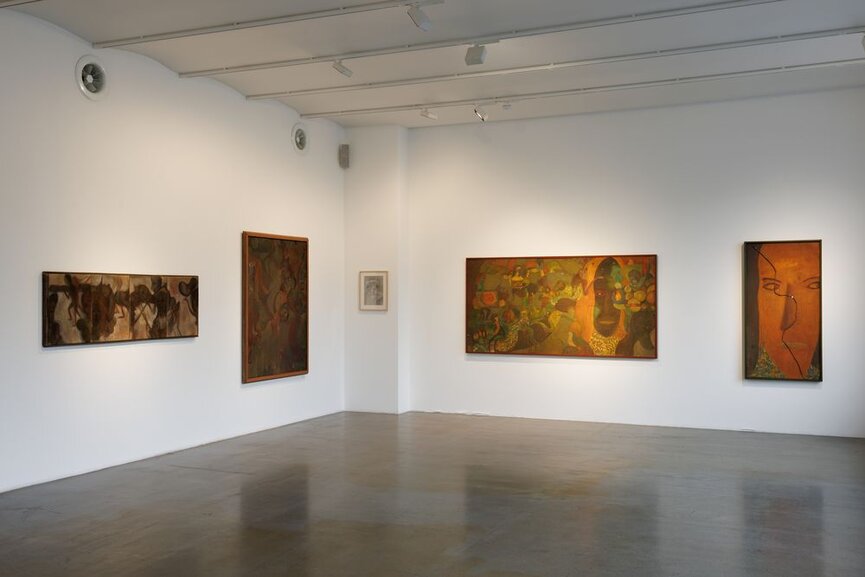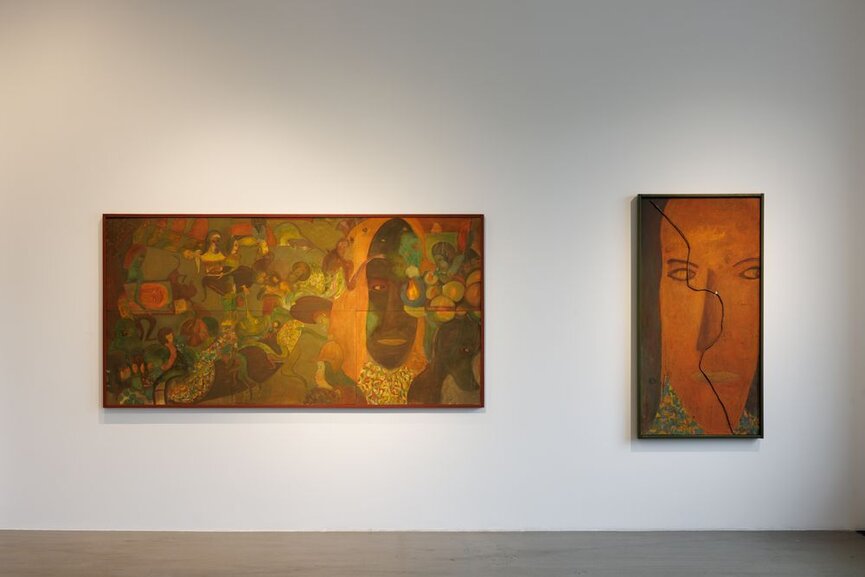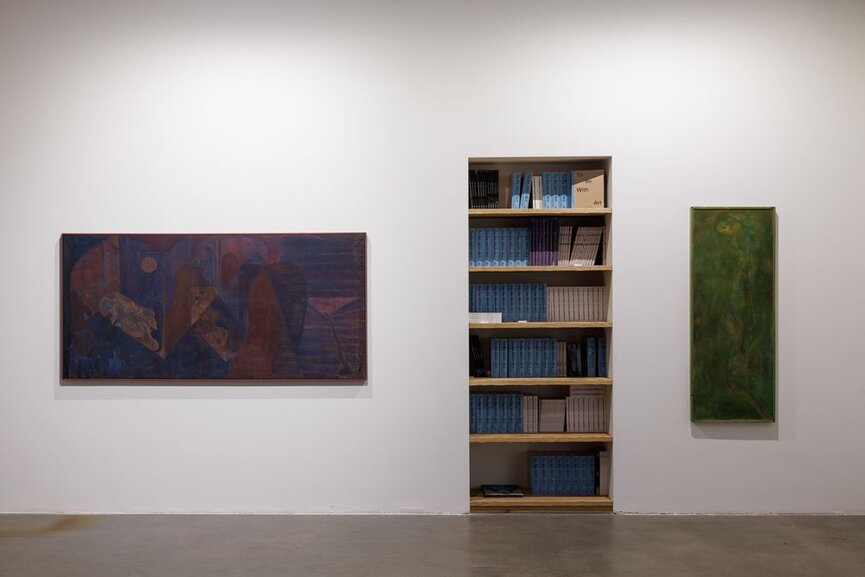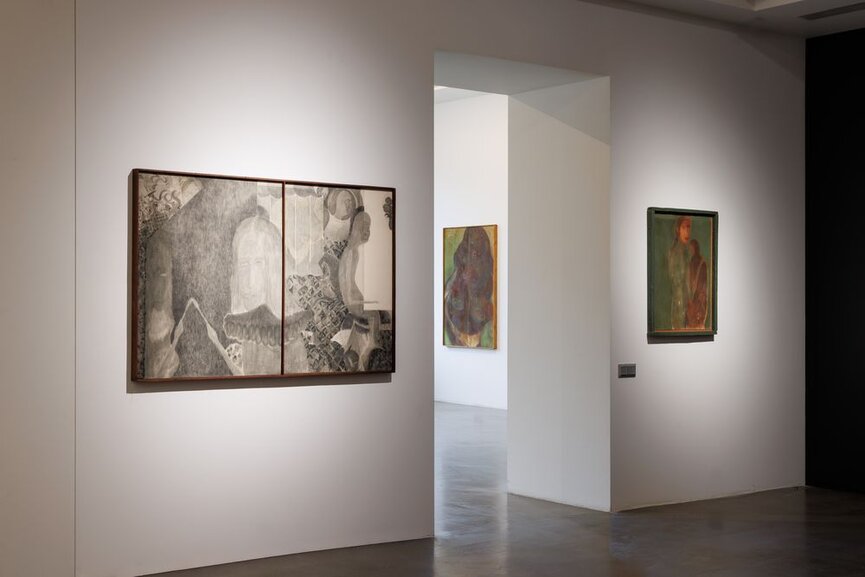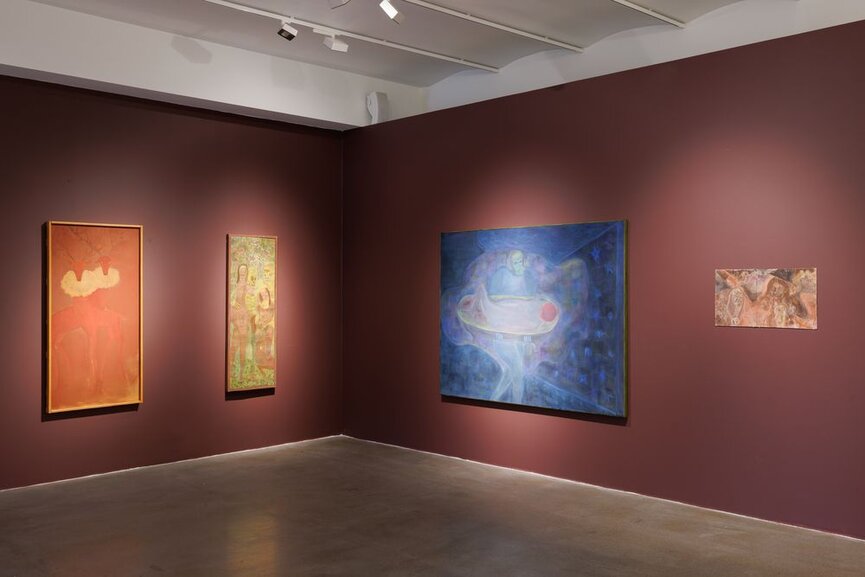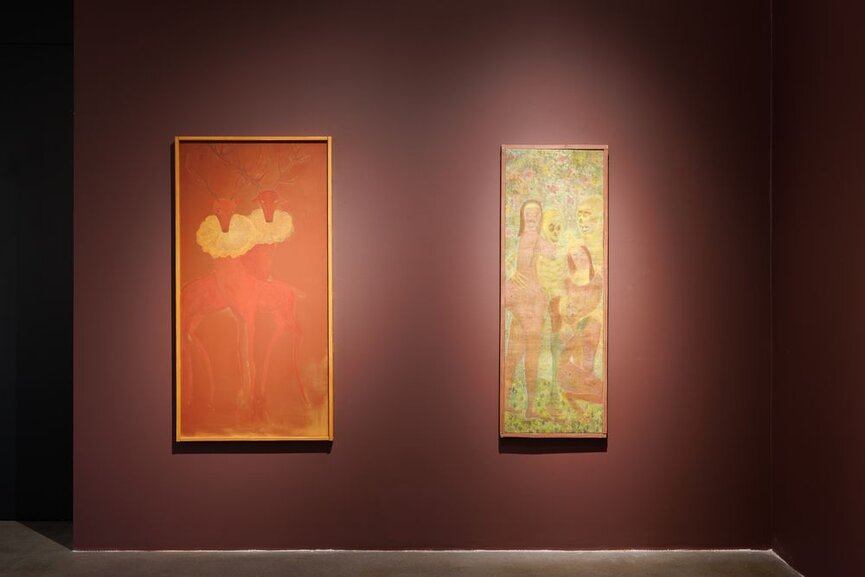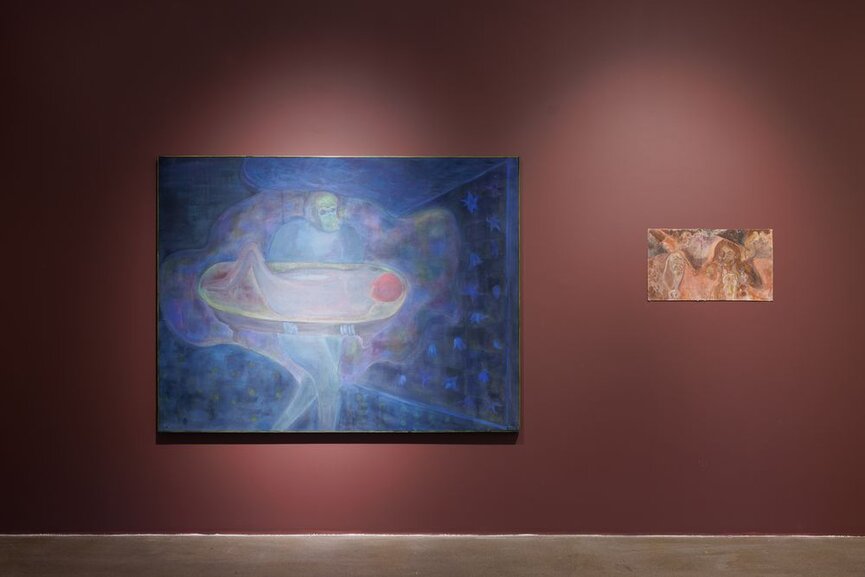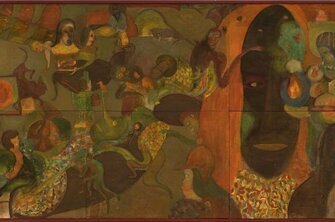
In the new series of works “ALLOHOORYA,” Begalskaya and Vilkin continue to explore the boundaries of human perception of visual images. Maintaining the conceptual line established in projects such as “Sobachya Lozhka” (2022) and “Okhra” (2024), they find new visual solutions to make the viewer shake up their wardrobe of visual patterns and clichéd interpretations. This time, the phantasmagorical world of Begalskaya and Vilkin begins to unfold in depth across the plane of the painting, creating a universe of parallel stories that flow into one another. This is a constellation of mise‑en‑scène assembled from the authors’ memories and the fruits of their imagination, which inevitably forces the viewer to engage in constructing their own meanings. The title of the new exhibition, “Allochory,” refers to the term used in biology to describe the ability of plants to disperse their seeds to another location using “available” means: wind, water, insects, and humans. Developing this concept as a metaphor, we can imagine the exhibition visitor, the viewer, as a means of transferring the created artistic meanings into real everyday life, into our reality. The seeds that can be sown are contained in the gestures and facial expressions of the characters, the emotional backdrop, and bodily empathy. Once they enter the corners of our consciousness, they can later give rise to amazing developments in the most unexpected places. So, visiting “Allochoria” is not just an isolated episode in the visitor’s life. The exhibition hints that art is embedded in more complex structures that organize our existence and provokes the viewer’s reflexivity. The format of the works reinforces the sense of a fragmented perception of reality: from disparate elements, like in children’s building blocks, a cohesive image emerges. But the trick lies in the fact that the rule by which they are ultimately united is never fully clear. The mutual flow of figures and background intensifies the ambivalence of perception, creating a multi‑layered composition and playing with the geometry of the gaze. At the same time, the integrity of the composition is maintained through the use of color, in which the artists are perhaps among the best on today’s Russian art scene. This is an amazing balance of brightness and restraint, joy and sorrow. This time, the already traditional palette of ochre, swamp green, and reddish‑brown is complemented by deep blue and grisaille.
Text: Anton Khodko