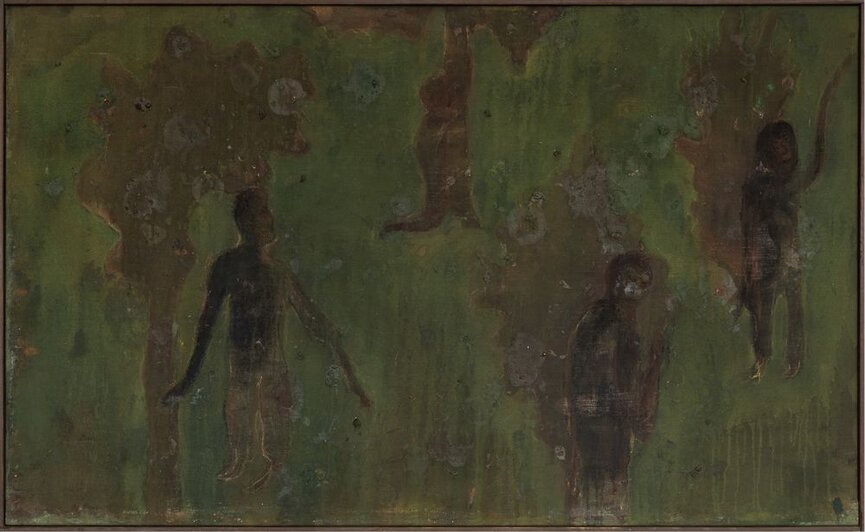
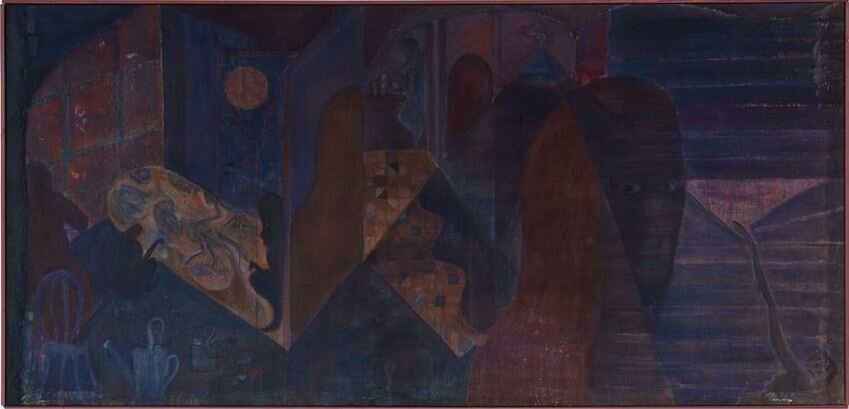
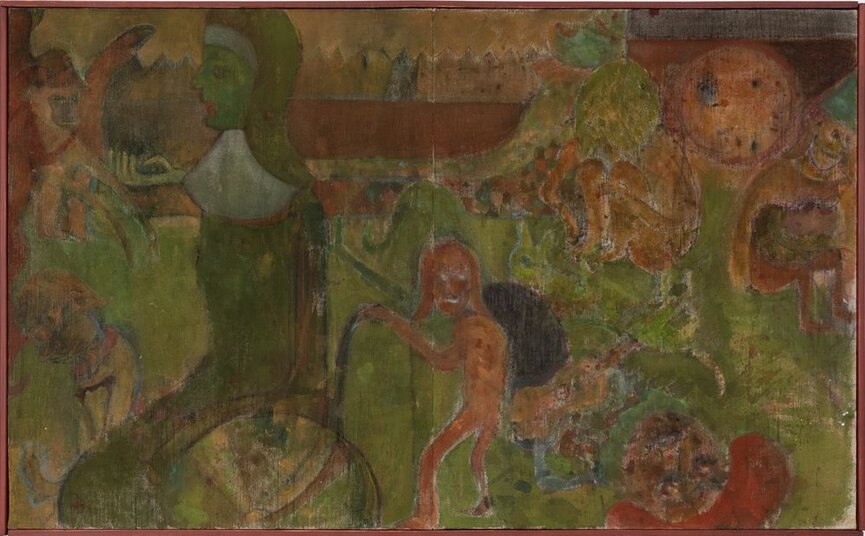
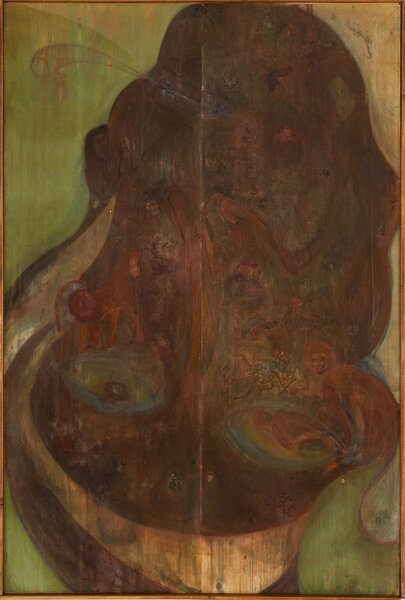
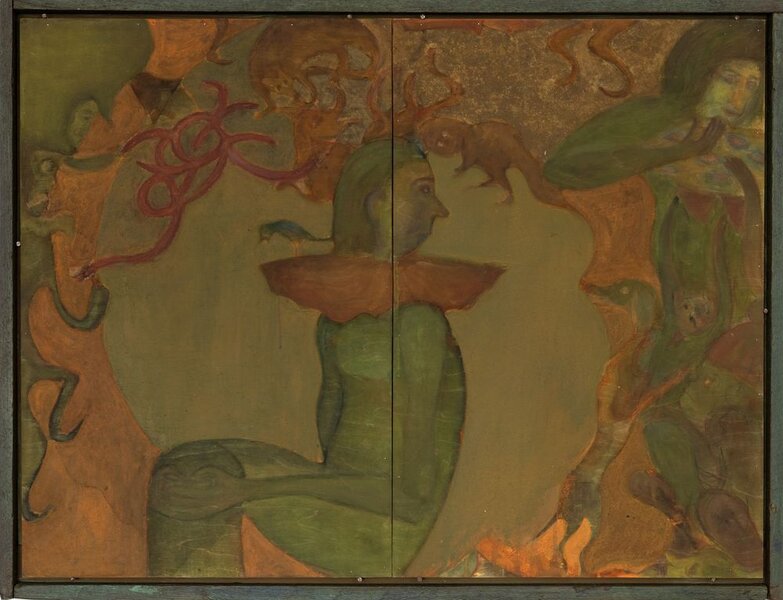
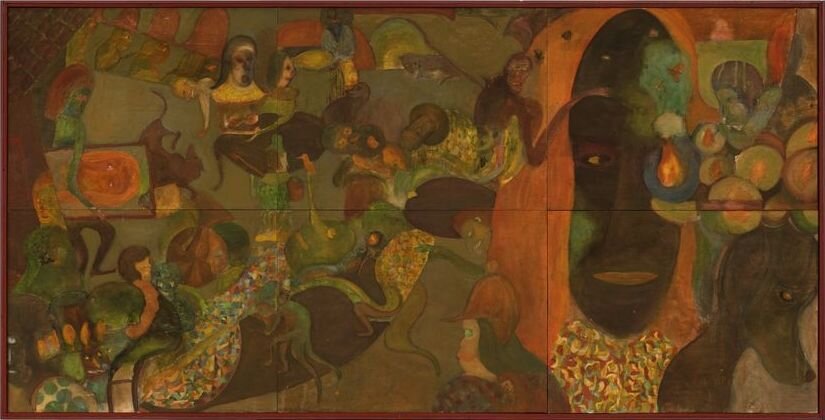
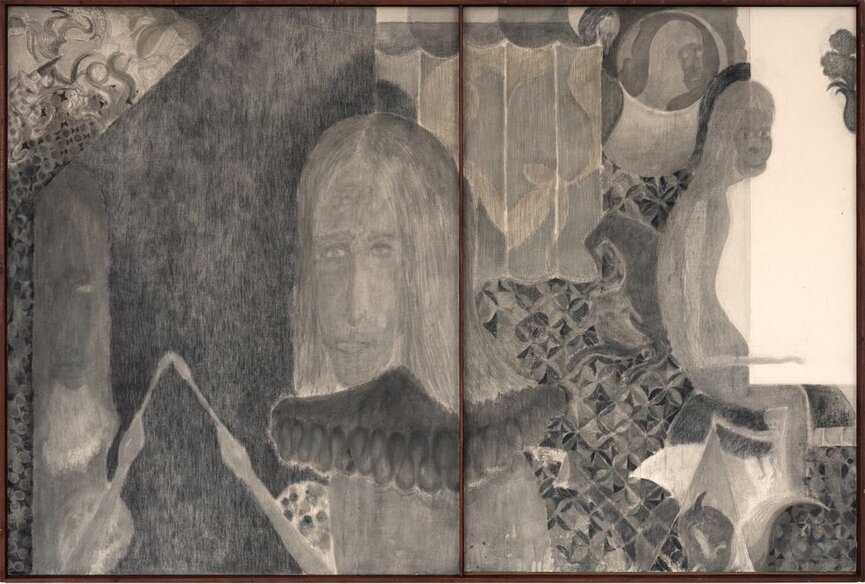
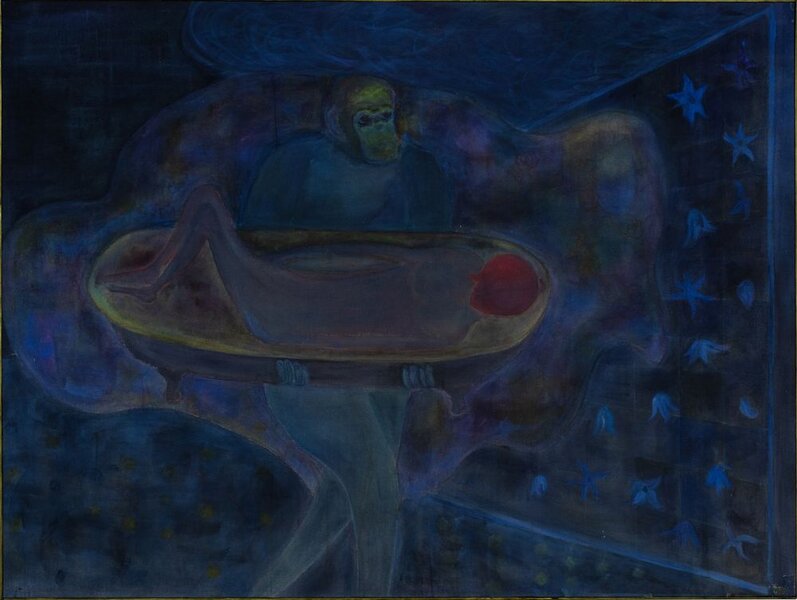
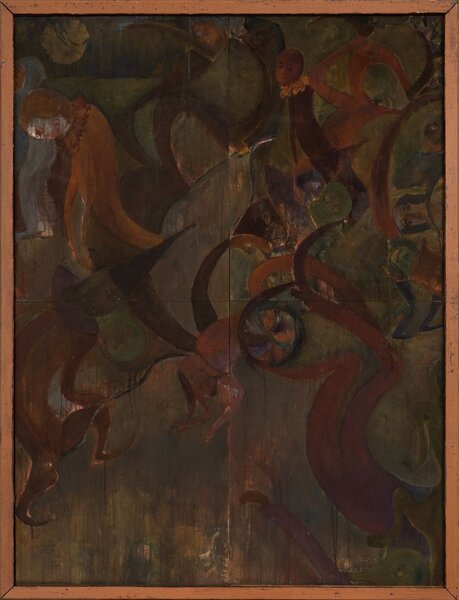
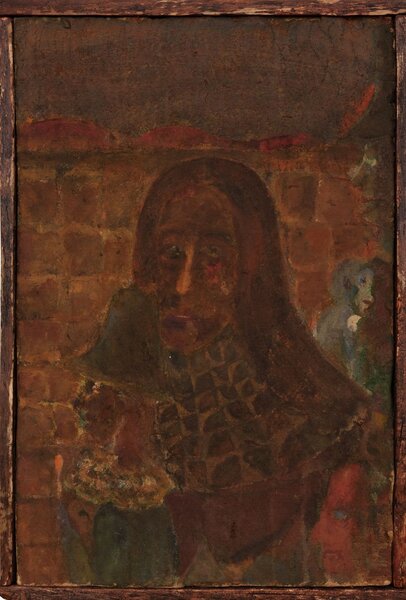
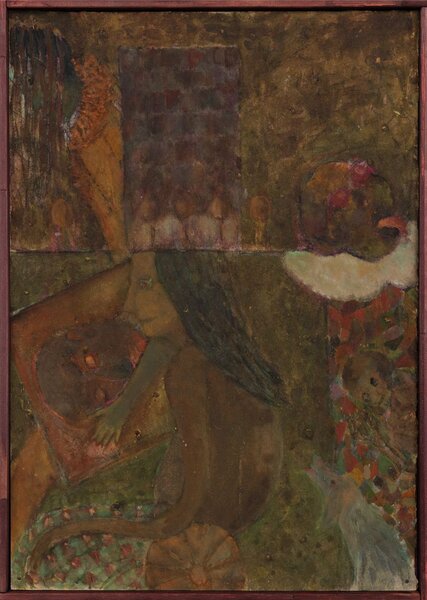
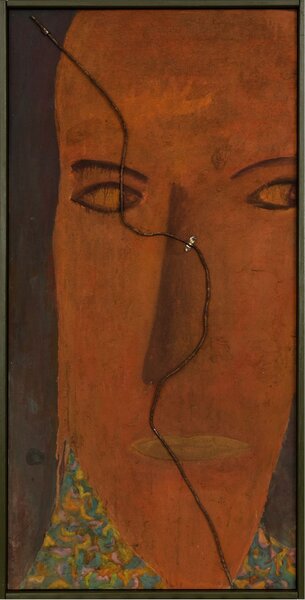
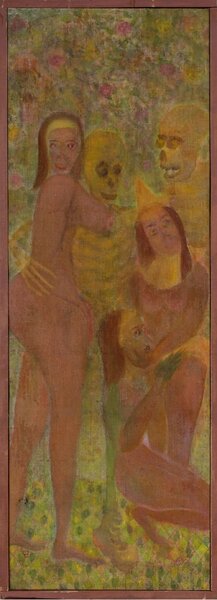
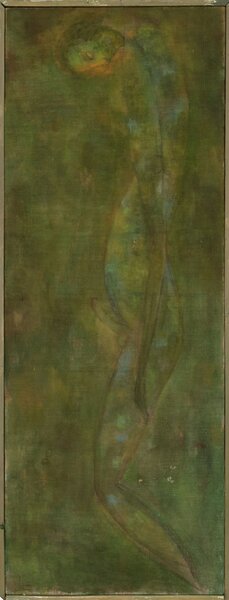
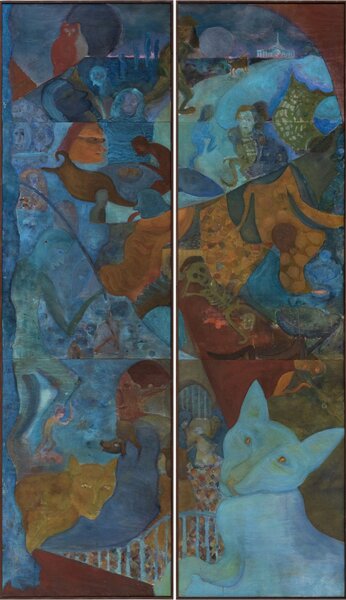
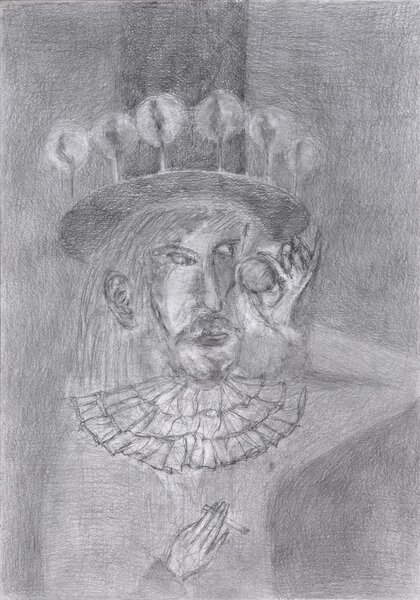
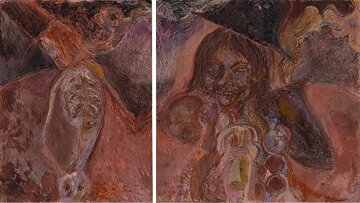
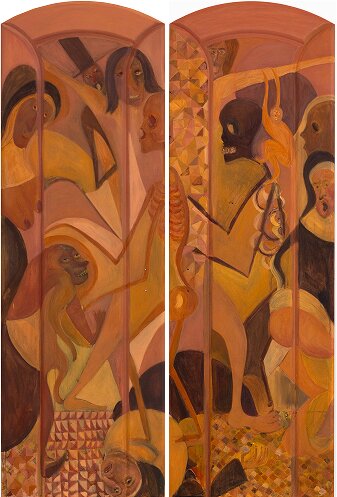
The format of the works reinforces the sense of fragmented perception of reality: from disparate elements, like in children’s building blocks, a cohesive image emerges. But the trick lies in the fact that the rule by which they are ultimately combined is never fully clear. The mutual flow of figures and background intensifies the ambivalence of perception, creating a multi‑layered composition and playing with the geometry of the gaze. At the same time, the cohesion of the composition is maintained by colour — an area in which the artists are probably among the best on today’s Russian art scene. This is an amazing balance of brightness and restraint, joy and sorrow. To the already traditional palette of ochre, swamp green, and reddish‑brown, this time a rich blue and grisaille are added.
Stylistically, the works of Begalskaya and Vilkin combine many references to the painting of the old masters, from whom they take motifs and forms that suit their concepts. As art historian Gleb Ershov writes about the duo’s art: “…their paintings contain numerous paraphrases, quotations, and allusions to the golden age of painting, when the optics of the gaze shaped near vision as a tactile‑sensory experience, when, in fact, the erotic experience of the canvas as an elusive texture, of the subject and the body as objects of desire, was formed.” Returning to this world, after having experienced death many times, lends a special flavor to the painting—worn and faded, tender and languid, as befits a sleeping princess who has just awakened from a long slumber. Her existence is phantom-like and elusive, yet the features of a new reality are already clearly discernible in her—a reality that is both alluring and repelling.